
Exploration Strategy
From data to drill targets
Ramsden’s exploration strategy is designed to systematically evaluate the Eagle's Nest Critical Minerals Project as a multi-commodity critical minerals system. The work plan focuses on answering the most important technical questions before drilling.
The Work Plan
A five-phase work plan
Data Compilation and Targeting
Compile historical reports, geochemical data, geophysical data and maps into a modern digital exploration database. This work is designed to identify gaps in historical work and define priority areas for follow-up.
Critical Minerals Characterization
Complete first-pass scandium assaying, systematic gallium follow-up and mineralogical work to understand which minerals host the critical metals. This phase is important because mineralogy helps guide future exploration and eventual metallurgical considerations.
Modern Geophysics
Complete focused modern geophysical surveys, including a high-resolution airborne magnetic, radiometric and LiDAR survey. These surveys are intended to refine targets and improve geological interpretation.
Mapping, Prospecting and Sampling
Follow up priority targets on the ground through mapping, prospecting and sampling. The objective is to confirm target areas, improve geological understanding and identify zones suitable for future drilling.
Drill Target Definition
Rank targets using geology, geochemistry, geophysics and mineralogy. The highest-priority targets can then be advanced toward future drill testing, subject to financing, permitting and technical review.
Targeting
From magnetics and geochemistry to priority areas
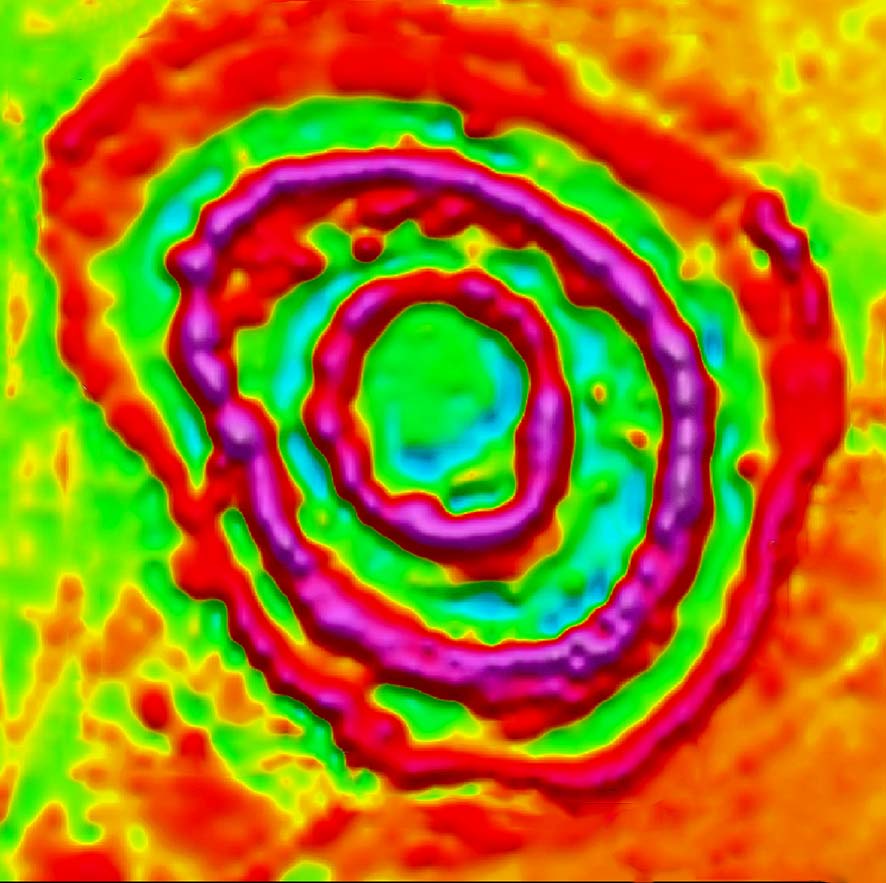
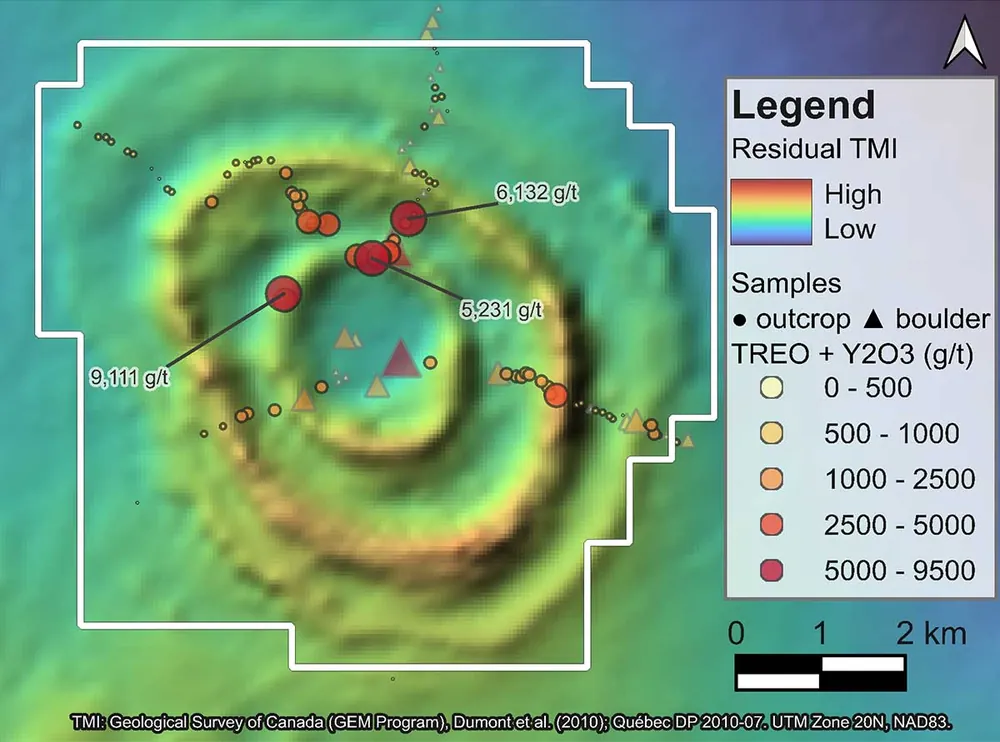
Modern targeting begins by bringing the historical magnetic and geochemical datasets together, then using them to rank where to focus mapping, sampling and, in time, drilling.
Stay Close to the Work